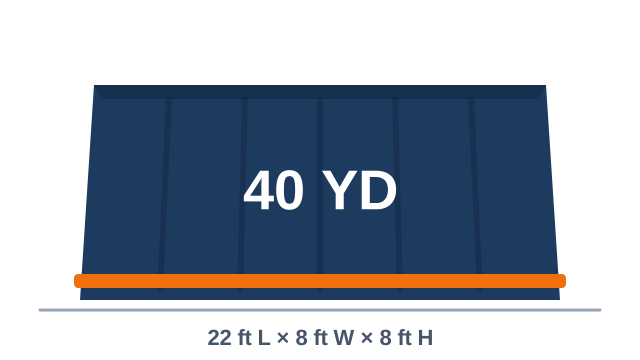
The 40 yard roll-off is the largest container on our trucks: 22 feet long, 8 feet wide, and 8 feet tall, with a rear swing door you can walk a loaded hand truck through. When a project measures debris in rooms per day instead of loads per weekend, this is the box.
How big is a 40 yard dumpster?
A 40 yard dumpster is 22 feet long, 8 feet wide, and 8 feet tall, and holds 40 cubic yards of debris.
| 40 yard dumpster dimensions | |
|---|---|
| Length | 22 ft |
| Width | 8 ft |
| Height | 8 ft |
| Volume | 40 cubic yards |
| Capacity | About 16 pickup-truck loads |
| Weight included | 4 tons (8,000 lbs) |
| Space needed to deliver | 22 ft of length, about 60 ft of straight approach, 24 ft overhead |
In practical terms that’s sixteen pickup-truck loads. The full contents of a large house. The demo debris from a restaurant build-out, packaging included, or two floors of office cubicles and carpet. The 8-foot walls turn the same 22-foot footprint as our mid-size containers into a genuinely industrial volume, which is why 40 yards live mostly on commercial sites, demolition jobs, and the kind of cleanout where a property has to be empty by a closing date.
At this scale the rear door matters more than any other spec. You open it, walk debris in, and stack to the back like loading a shipping container. Nobody is loading over an 8-foot wall.
Large dumpster rental: the right jobs for a 40 yard in Miami
- Commercial construction and renovation: tenant build-outs, office demos, and retail conversions across the county, from Doral warehouse districts to storefronts on Calle Ocho.
- Structural demolition debris, meaning the light fraction of a teardown: framing, roofing structure, interior finishes. The concrete fraction rides separately; more on that below.
- Multi-unit turnovers, where an apartment building is flipping units between tenants and one container serves a week of crews.
- Warehouse and storage clearing: racking, pallets, and years of dead inventory.
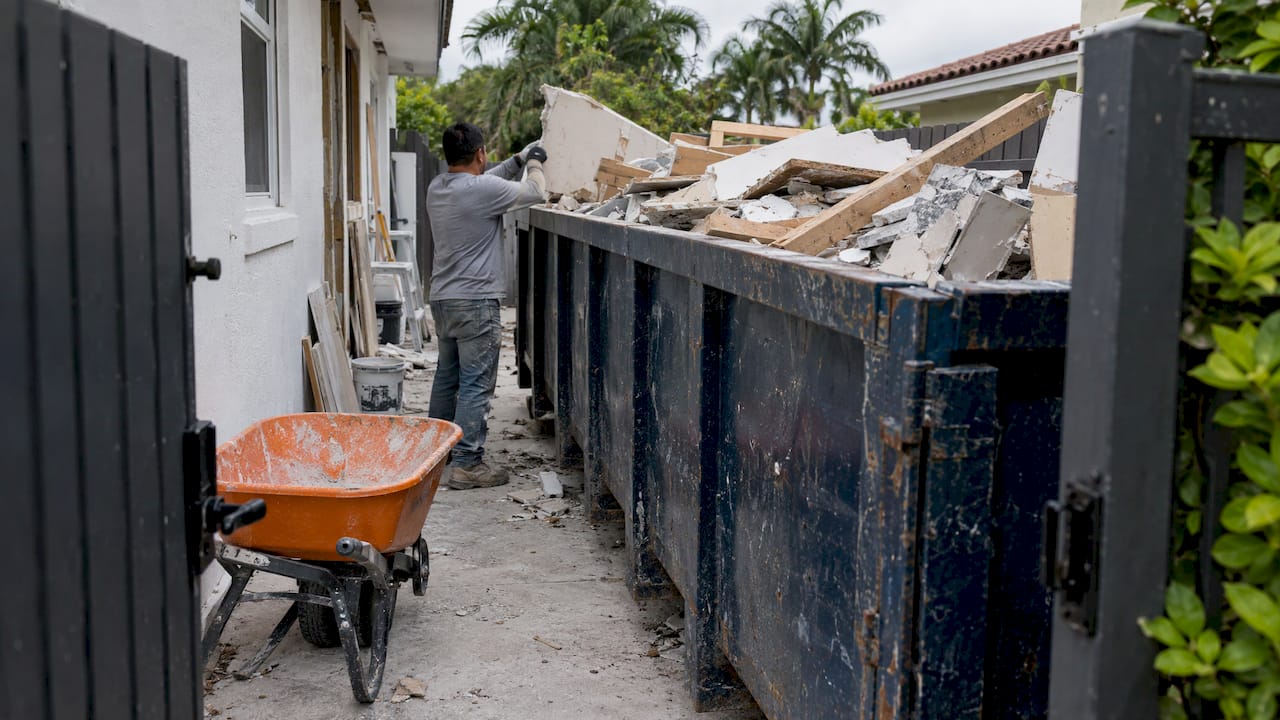
- Major cleanouts, including hoarding clearances and estate situations where the volume is extreme but the weight is modest. Furniture and household goods are exactly the light, bulky debris this container is shaped for.
For ongoing commercial work, our commercial dumpster service covers scheduled swaps and account billing; for demo-heavy projects, start at the construction page.
Weight limits: read this before you book a 40
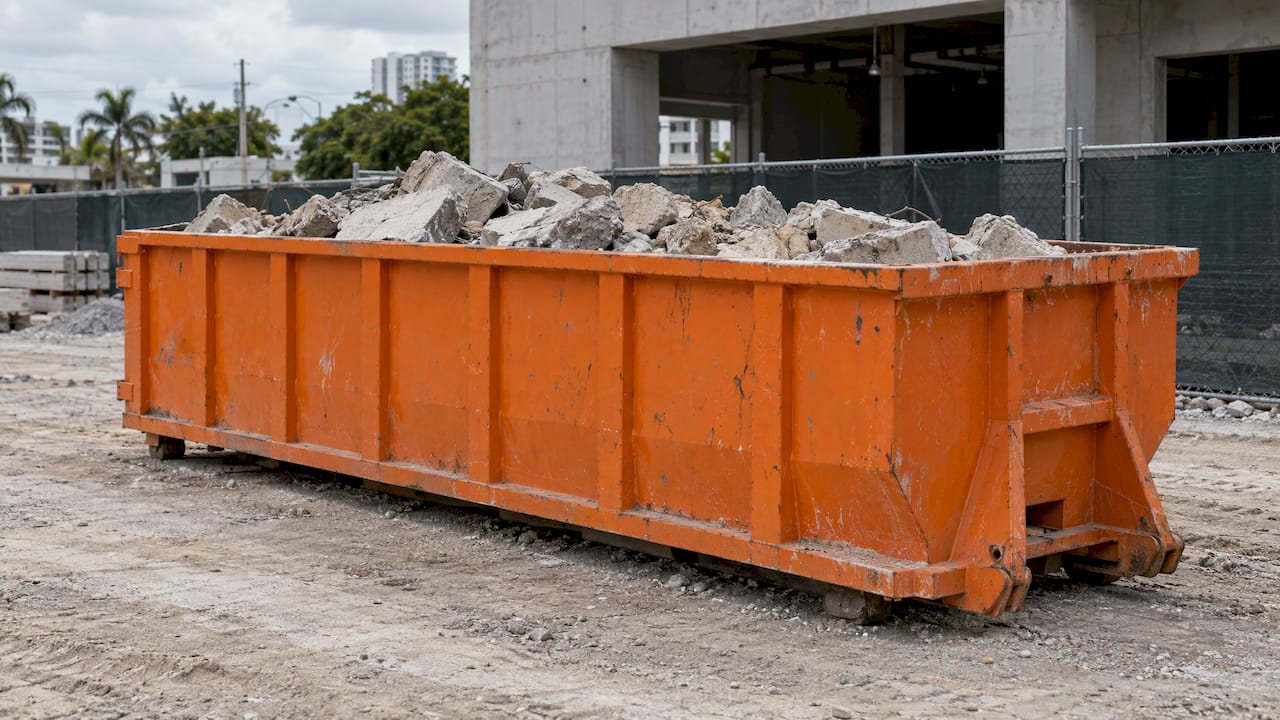
The flat rate includes 4 tons, and for the debris a 40 yard is designed for, that’s plenty. But the physics of dense material are unforgiving. A 40 yard filled even halfway with concrete, tile, dirt, or sand would be more than double the legal road limit, and the truck simply can’t pick it up. Every experienced Miami demo contractor already runs the standard pairing: a 40 for the light fraction, with a 10 yard cycling for the heavy fraction. If you’re new to sizing demolition debris, call us and we’ll split the load on paper before anything is delivered.
Placement and permits
Height is the operational constraint. Delivering a 40 yard takes about 24 feet of overhead clearance at the drop point while the truck tilts the container off, so power lines, oak canopy, parking-structure entrances, and awnings are all disqualifiers we check for. On commercial sites this is rarely an issue. On residential streets it sometimes is, and if the container needs to sit in the public right-of-way, Miami-Dade or the municipality will want a permit. Our permit guide explains the rules, and we pull the permit for you when one is needed.
When a 40 is the wrong answer
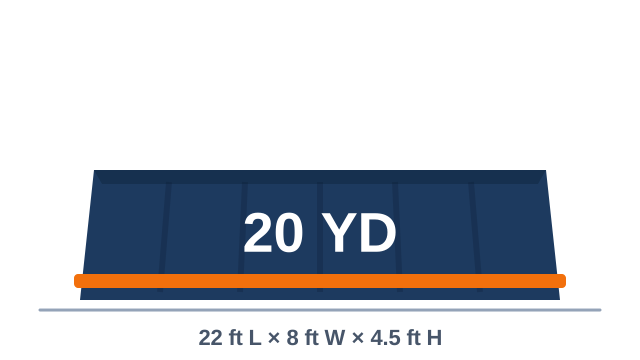
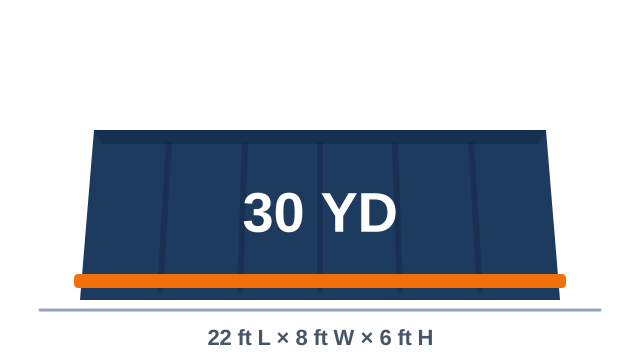
If you’re not sure you need a 40, you probably don’t. Most whole-home renovations are 30 yard jobs, and most single-trade projects fit a 20. The 40 earns its extra $100 only when the debris is genuinely light and genuinely enormous. Since our pricing is flat and published on the pricing page, sizing down never costs you anything but a phone call.