Construction dumpster rental in Miami costs $495 to $695 flat for the 20, 30, and 40 yard containers most job sites use, plus $395 for a 10 yard heavy-debris box, with weight tickets on every haul. Contractors judge a dumpster company on three things: does the container show up when dispatch said it would, do swap-outs happen fast enough that crews never stack debris on the slab, and does the invoice match the quote. That’s the whole service. Here’s how we run it in Miami.
C&D debris, handled correctly
Mixed C&D (lumber, drywall, stucco, metals, roofing, packaging) rides in our 20, 30, and 40 yard containers and goes to C&D processing facilities in the county, where recoverable material like metal, clean wood, and cardboard gets pulled before landfill. You get the scale ticket from every haul.
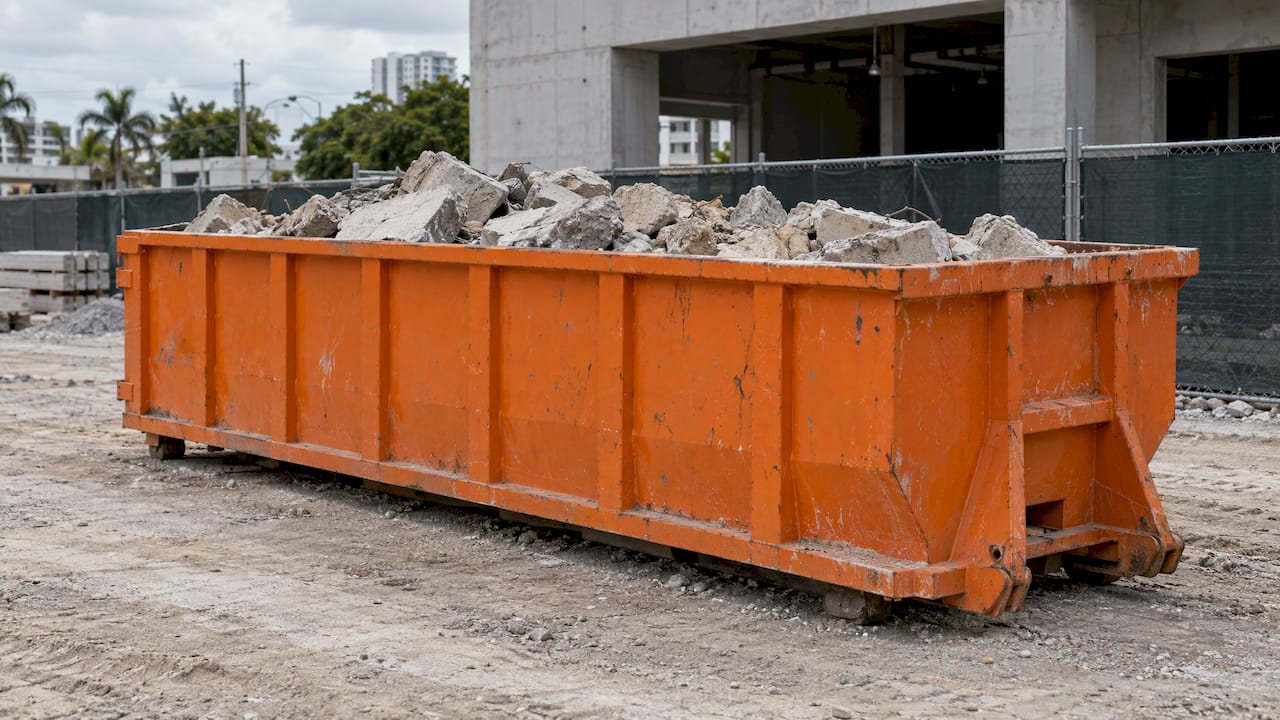
The dense fraction is a different animal, and this is where inexperienced haulers burn their customers. Concrete, block, tile, dirt, and sand have to run in dedicated 10 yard heavy-debris containers. Road weight limits make anything larger illegal to lift when loaded with masonry, and mixed-in concrete turns a cheap C&D load into an expensive one. The upside of separating is real: clean concrete goes to crushing and recycling operations around Medley and Opa-locka at a lower disposal rate than mixed debris. On an actual demo job, the two-container system usually costs less than the shortcut.
Roofing dumpster rental
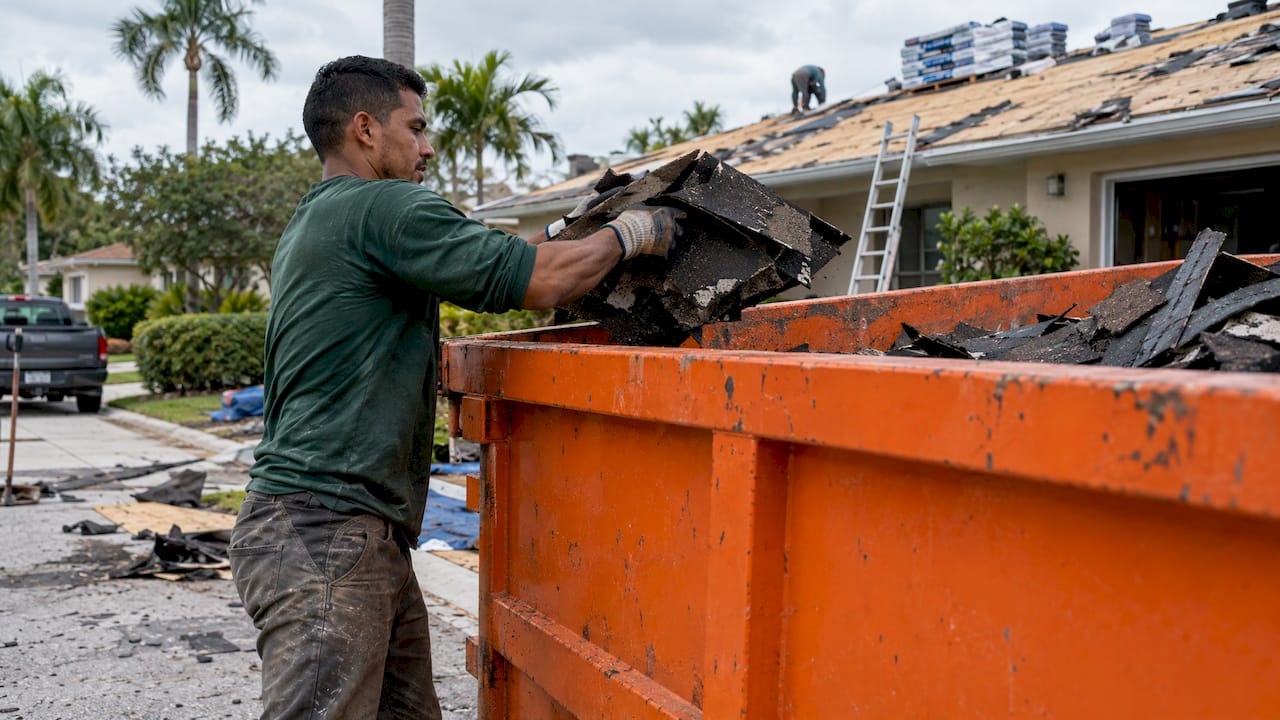
Roofing debris is heavy for its size, so roofing dumpsters are sized by the square count and the material, not by the footprint of the house. For shingle roofs, a 20 yard handles a tear-off up to about 30 squares and a 30 yard up to about 45. Concrete and clay tile weigh three to four times as much per square, so tile tear-offs run in smaller containers or several hauls. Tell dispatch the square count and whether it’s shingle, tile, or a flat roof, and we place the container where the crew can throw debris straight off the eave. Roofers on production schedules get standing swap-outs.
Demolition dumpster rental
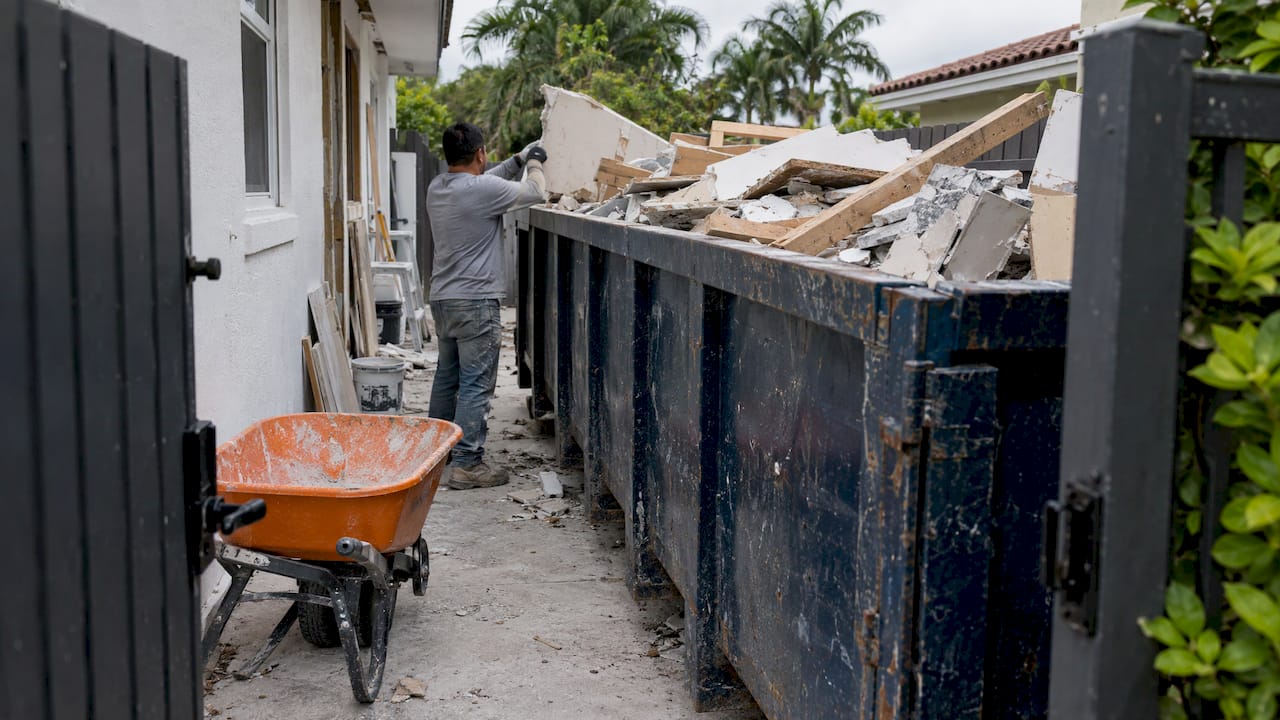
Demolition produces two kinds of debris, and they need different containers. The light fraction (framing, drywall, roofing structure, interior finishes) goes in a 30 or 40 yard. The heavy fraction (concrete, block, and masonry) goes in a separate 10 yard. Running both on a demo site keeps every load legal on the road and usually costs less than overweight fees on one big container. For interior selective demo, such as a kitchen or a commercial tenant space, a single 20 or 30 yard is often enough.
Concrete dumpster rental
A concrete dumpster is always a 10 yard. Concrete, block, brick, and pavers weigh well over a ton per cubic yard, so a larger container would exceed legal road weight long before it was full. Keep the load clean (concrete only, no wood or trash mixed in) and it can go to a recycling facility at a lower disposal rate. A driveway or patio removal usually takes one to three 10 yard hauls, depending on the slab’s size and thickness.
Weight rules that matter on Miami jobs
Every flat rate includes a weight allowance, from 1.5 tons on the 10 yard up to 4 tons on the 40 (the full table is on the pricing page), with overage at a published per-ton rate billed off the scale ticket you also receive. Two Miami-specific weight traps worth knowing:
- Tile roofs. Concrete and clay tile tear-offs weigh three to four times what shingle jobs weigh per square, so a 20 yard of tile is an overweight container. We size tile jobs by the square count and run heavier-rated hauls. Tell dispatch it’s tile, not just “roofing.”
- Stucco and plaster demo. Old Miami masonry houses shed far more weight per room than frame construction. Budget a heavier container mix on pre-1970 gut jobs.
Swap-outs and site logistics
A container that’s full at 10 AM and not swapped until Thursday costs you crew time. Swap-outs called in by mid-morning happen same-day; otherwise next-morning, first route. Roofers and demo crews on production schedules can book standing swaps. Our drivers place on cribbing where the slab or pavers matter, and we’re used to the county’s tighter sites, from Wynwood storefronts to Brickell staging lanes to Miami Beach alleys, where placement is a conversation with the site super rather than a guess.
If the container needs to sit in the public right-of-way, the municipality will want a permit. The City of Miami, Miami Beach, and the villages each run their own counter. We pull those permits ourselves, because a red-tagged container helps nobody. Details are in the permit guide.
Contractor dumpster rental and billing
GCs, roofers, remodelers, and demo contractors working across Miami-Dade get account terms: consolidated invoicing by job site, PO, or cost code, net terms once we’ve done a few rentals together, weight tickets attached to every invoice line, and one dispatcher who knows your open jobs instead of a call center. If you’re bidding a project and need disposal numbers for the estimate, call. We’ll price the container plan off your takeoff, including the heavy/light split, so the bid survives contact with the actual debris.
Serving every job site in Miami-Dade
Homestead subdivisions, Miami Gardens re-roofs, high-rise build-outs downtown: if the site is in Miami-Dade County, we deliver to it. See the full service area list. Same-day delivery is the norm when you call before noon.