Yard Waste Dumpster Rental in Miami: Sizes, Rules, Costs
By Erik Rivera, Owner, Dumpsters.miami
Updated
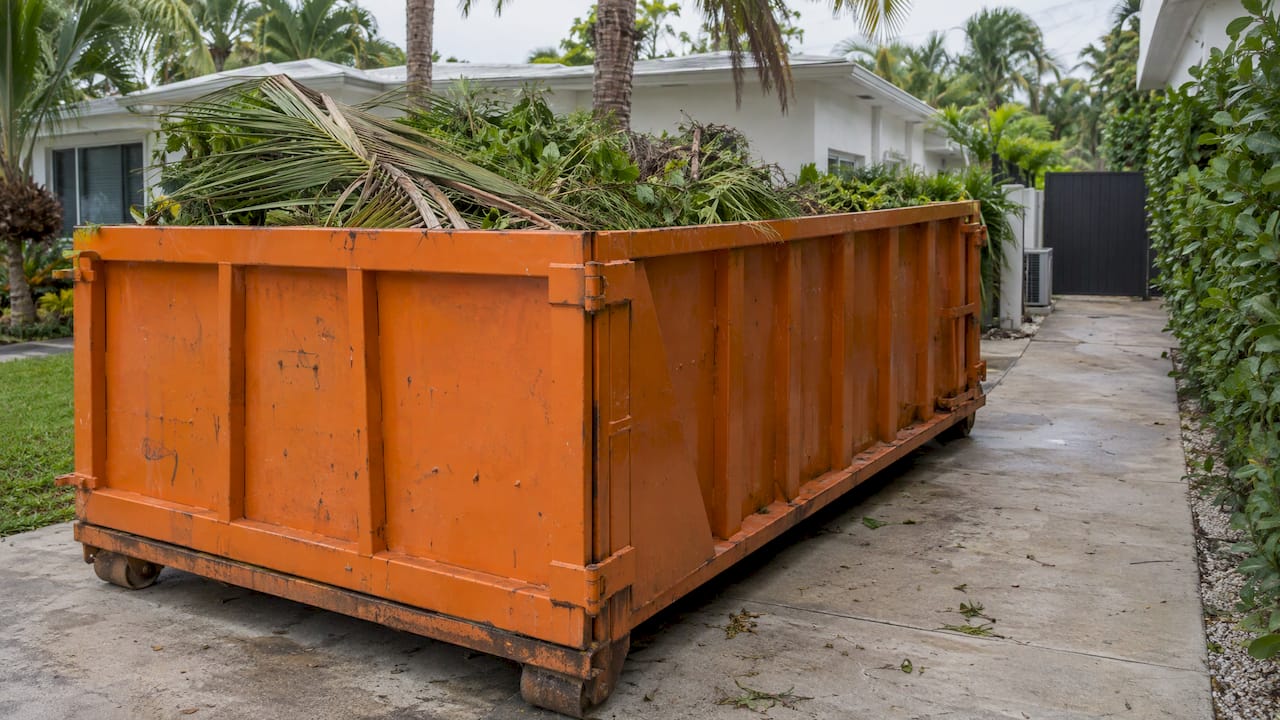
For most yard cleanups in Miami-Dade, a 10 or 20 yard roll-off is the right call: the 10 yard ($395) suits a single tree or a hedge removal, and the 20 yard ($495) suits a full lot cleanup. Both include delivery, pickup and a seven-day rental. The details that decide your bill are weight, how you load the branches, and what you keep out of the container. This guide covers each one.
TL;DR
- Pick a 10 yard ($395) for one tree, a hedge or a small garden clear-out. Pick a 20 yard ($495) or larger for a whole-lot cleanup, a palm removal or storm debris.
- Our flat rate includes delivery, pickup and 7 days. Extra days are $15 each, and weight over the included allowance is $85 per ton.
- Keep yard waste clean: no paint, chemicals, batteries, tires or appliances mixed into the pile.
- Cut branches short, load them flat and stack heavy trunk sections at the bottom so the container stays level and under the rim.
- Placement on a public street can require a permit. We handle permitting as needed for Miami-Dade projects.
Table of Contents
- What counts as yard waste in a dumpster
- Which size dumpster fits yard debris
- What can and cannot go in a yard waste dumpster
- How to cut and load branches safely
- Storm debris, flood debris and fire debris
- Permits and placement in Miami-Dade
- What a yard waste dumpster costs
- Our perspective
- Ready to book your yard waste dumpster
- FAQ
- Sources
What counts as yard waste in a dumpster
Yard waste is the plant material that comes out of a property: tree limbs, trunks, palm fronds, hedge trimmings, shrub roots, grass clippings, leaves, sod and small amounts of soil clinging to roots. In South Florida that list runs long. Fast-growing tropical landscaping, palms, ficus hedges and mango or avocado trees can produce a lot of volume in a single afternoon of work.
A roll-off dumpster is an open-top steel container, delivered on a truck and picked up when you are done. You fill it at your own pace during the rental period. That is the main advantage over hauling loads yourself: one delivery, one pickup, and no repeated trips.
Yard debris is also a different job from a household cleanout. It is bulky, often wet and heavy, and it can come mixed with fence panels, pavers or old planters. How you sort it affects which size you need and what the container can legally take.
Which size dumpster fits yard debris
Dumpster sizes are named for their volume in cubic yards. Branches and brush are awkward shapes with a lot of air between them, so they fill space faster than their weight suggests. Green material that is still wet is heavier than dry material, so weight can matter as much as volume.
Here is how our four sizes map to typical yard projects:
| Size | Flat rate | Good for |
|---|---|---|
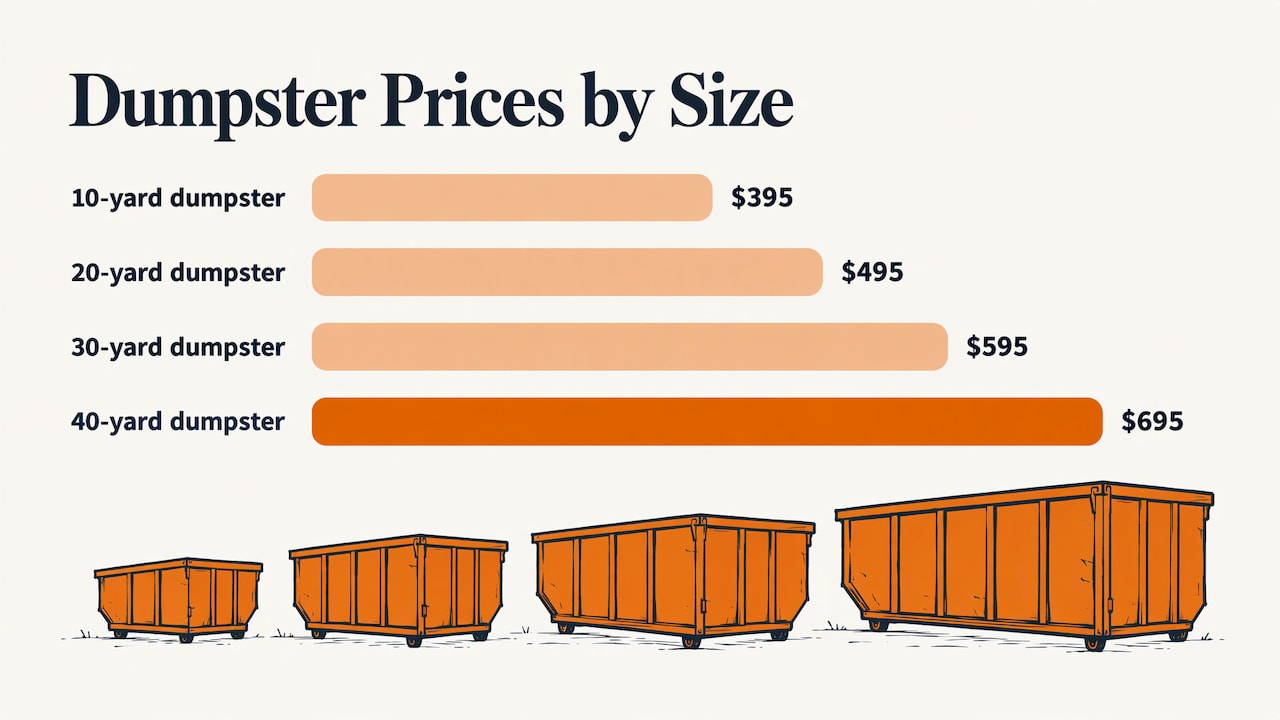
| 10 yard | $395 | One small or medium tree cut into pieces, a hedge removal, a garden bed teardown, a season of trimmings |
| 20 yard | $495 | A full backyard cleanup, several palms, a large tree, sod removal on a typical lot |
| 30 yard | $595 | Overgrown or neglected lots, multiple large trees, landscaping redesign with debris |
| 40 yard | $695 | Large properties, storm cleanup across a big lot, commercial grounds clearing |
A practical way to choose: picture the pile you would have if everything came down and sat on the lawn. If it would fit across a driveway at waist height, start with the 10 yard. If it would cover most of the yard, start with the 20 yard. When you sit between two sizes, go up one. Branches settle as you load, but a container that fills early is a bigger headache than a bit of spare room.
The 10 yard is also the easiest to place. It has a smaller footprint, which matters in tight Miami lots, narrow driveways and townhome communities.
Does yard waste ever go over the weight limit?
Rarely. Branches, palm fronds, hedge clippings and leaves are bulky and light, so a yard-waste load fills by volume long before it reaches the weight included with each size: 1.5 tons on a 10 yard, 2 on a 20, 3 on a 30 and 4 on a 40. Size yard debris on volume. The exceptions are soil, sod, rock and stumps with root balls, which are dense and behave like concrete. If those are in the job, tell dispatch, keep them to a smaller container and keep them below the rim; anything over the allowance is $85 per ton from the scale ticket.
A quick example
Say you are removing a mature oak limb that came down in a summer storm, plus trimming two hedges along the fence. That is a 10 yard job. Now say you are clearing a half-acre with overgrown shrubs, two fallen trees and years of leaf buildup. That is a 30 yard job, or a 20 yard with a second swap if you prefer to work in phases.
What can and cannot go in a yard waste dumpster
Generally fine:
- Tree limbs, trunks and stumps cut to manageable sections
- Palm fronds and palm trunk sections
- Hedge and shrub trimmings
- Leaves, grass clippings and sod
- Roots and small amounts of dirt attached to them
- Untreated wood from a garden project
Keep out:
- Paint, pesticides, herbicides, fuel, motor oil and other chemicals
- Batteries and electronics
- Tires
- Appliances
- Anything that is not plant material and is not on our approved list
The full list for Miami is on our prohibited items page. Read it before loading, especially if the yard also holds a shed, old irrigation equipment or a leftover chemical stash. Hazardous items are the main reason a load gets complicated, because they cannot be mixed with ordinary debris.
State agencies say the same about cleanup in general. The Wisconsin DNR advises keeping tree and yard waste separate from other debris and letting wet material dry where possible. Nebraska’s guidance adds that hazardous materials should be containerized and labeled and sent to a permitted facility, and that lead-acid batteries and appliances are banned from landfills. These are other states’ rules, but the principle of keeping loads clean applies everywhere.
How to cut and load branches safely
How you load a dumpster affects how much fits, how safely the driver can haul it, and whether you pay for extra weight.
- Cut branches to short lengths. Pieces a few feet long lie flat and pack tightly. Long limbs sticking up create gaps and can overhang the rim.
- Put heavy material at the bottom. Trunk sections and thick limbs go on the floor of the container, spread evenly. Lighter brush and leaves go on top.
- Load branches in the same direction. Laying them parallel, rather than in a random heap, uses space much better.
- Stay below the fill line. Material should not rise above the top of the container. Local ordinances commonly say this too: Peoria, Illinois, for example, says materials cannot extend beyond a dumpster’s height or width.
- Bag loose leaves and clippings if you can. It stops wind from scattering them while you work, and it keeps the area tidy.
- Let wet material dry briefly if the schedule allows. Dry brush weighs less.
- Wear gloves, eye protection and sturdy boots. Chainsaw and pruning work throws debris, and Florida yards have thorns, sharp palm fronds and the occasional wasp nest.
If you are using a chainsaw or working near power lines, hire a licensed, insured tree service for the cutting. That is work for a professional, and the dumpster is the place the debris goes afterward.
Storm debris, flood debris and fire debris
South Florida homeowners often search for a dumpster after hurricane season, so this deserves its own section. Storm cleanup is not the same as routine trimming.
Tree debris after a storm
Storm piles tend to mix vegetation with fence sections, roofing, screen enclosures and damaged outdoor furniture. Separate them as you go. Tree and brush material can go together. Building materials, metal and household items should be sorted so each can be handled correctly. Agencies in other states echo this: the Minnesota Pollution Control Agency lists tree and brush waste as its own disposal category, separate from demolition debris, hazardous waste and appliances.
For a big storm, a 20 or 30 yard container usually makes more sense than a 10 yard, because debris comes in volume. If you need a container quickly, our same-day dumpster rental runs from $395 to $695 depending on size. Most orders placed by noon go out the same day, but in the days right after a hurricane demand spikes countywide and lead times stretch, so book as soon as you know what you need.
Flood debris
Flood cleanup brings extra safety steps. Oregon’s emergency management office advises documenting damage with photos before you throw anything out, and notes that debris touched by floodwater is not hazardous unless it contains chemicals or asbestos. The same guidance recommends waterproof gloves, eye protection, boots and an N95 or respirator mask, especially around mold and dust.
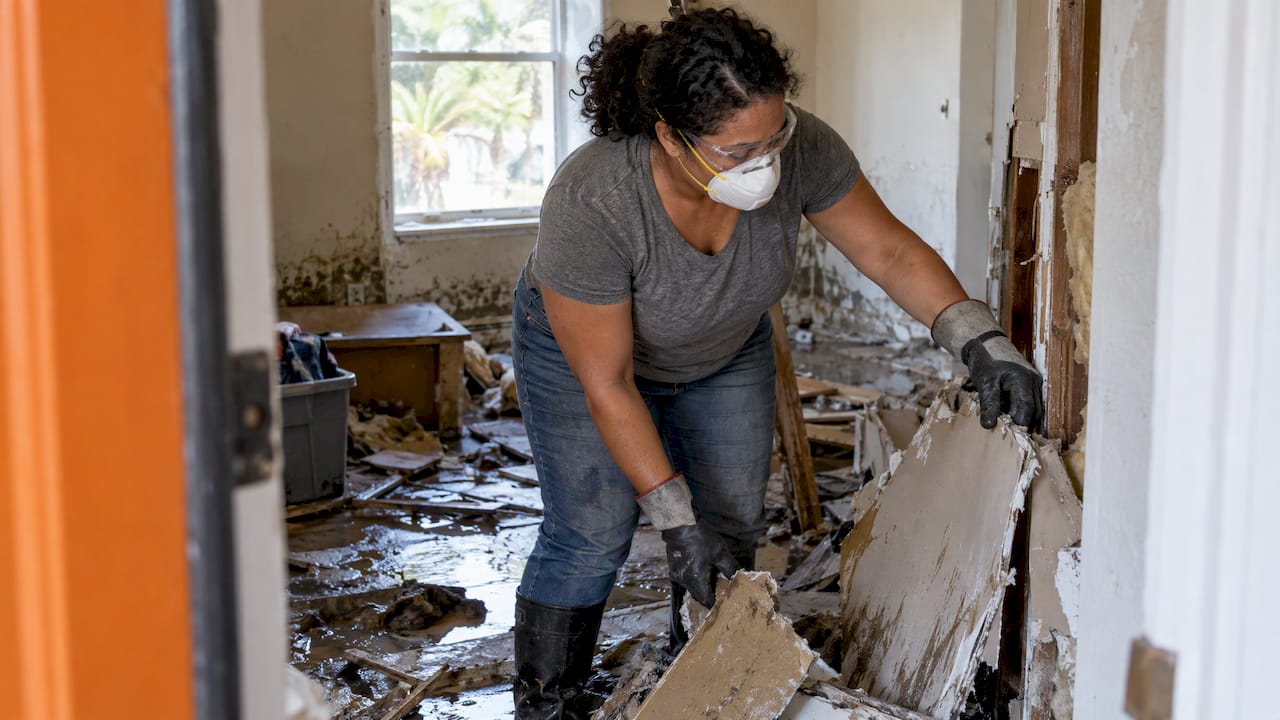
Older homes need extra care. The Wisconsin DNR warns that buildings from the mid-1900s to the 1970s may contain asbestos in insulation, flooring, ceiling tiles or roofing. Nebraska’s guidance says asbestos must be removed from a structure before its building materials are disposed of, and that certified professionals should manage friable asbestos. If your flooded home is that old, have it assessed by a certified asbestos professional before you tear out walls or flooring.
Fire debris
Burned material is mixed material: charred wood, melted plastics, wiring, insulation. It is not yard waste, and it is usually handled as construction and demolition debris. For fire cleanup, use our construction dumpster rental, and talk to our dispatcher about what is in the pile. If the cleanup follows an insurance claim, photograph everything first.
A note on burning
Some people consider burning brush. Texas guidance, for instance, says vegetation can be burned only if the county allows it and never during a burn ban. Rules differ by county and municipality, so check with your local fire department before you consider it. A container is the simpler path for most households.
Permits and placement in Miami-Dade
Where the dumpster sits determines whether you need a permit. A container on your own driveway or lawn generally needs none from the city, though some neighborhoods and HOAs have their own rules. A container on a public street or right-of-way is another matter.
Cities across the US handle this in similar ways. Mountain View, California, requires a Temporary Encroachment Permit for a debris bin in the street and sets minimum distances from hydrants, crosswalks and driveways. Rockford, Illinois, charges $10 per day for a designated parking space under its 2026 application and allows public placement only when private property is not practical. Those are examples of how rules work, not Miami rules.
In Miami-Dade, rules vary between municipalities such as Miami Beach, Miami Shores and Coral Gables. Our Miami-Dade permit guide explains when and where a permit applies, and we handle permitting as needed when we book your rental. We are a local operation and we work with these requirements every week.
Placement tips that avoid trouble:
- Put the container on a flat, hard surface. Plywood under the wheels protects pavers and asphalt.
- Leave overhead clearance for the truck. Low branches and power lines matter on delivery day.
- Keep access open for the truck on pickup day.
- Do not block a hydrant, a crosswalk or a sidewalk.
What a yard waste dumpster costs
Our pricing is flat-rate and published. The number you see covers delivery, pickup, a seven-day rental and included disposal weight.
| Item | Price |
|---|---|
| 10 yard dumpster | $395 |
| 20 yard dumpster | $495 |
| 30 yard dumpster | $595 |
| 40 yard dumpster | $695 |
| Extra rental day | $15 per day |
| Weight overage | $85 per ton |
You can see the full pricing page for the latest figures.
Three things move the final cost:
Size. Choose by volume and by how wet or dense the material is. Wet green waste and sections of trunk add weight quickly.
Time. Seven days covers most yard projects. A weekend cleanup fits easily. If a tree service is finishing on day eight, extra days are $15 each, with no surprise fees.
Weight. Overage is billed at $85 per ton above the included allowance. Loading dry brush, and keeping soil, concrete and pavers out of a yard waste load, helps you stay within it. Dense materials like soil and stone are weighty, so if a landscaping project has both plants and hardscape debris, ask us whether to split it across two containers.
Our perspective
A yard cleanup comes down to two questions: will the price change, and will the container show up when you need it. A national broker resells the job to whichever local hauler is free, so it cannot promise either. We dispatch locally and publish every price.
That is why we publish a flat rate for every size and tell you what is included before you book. Delivery, pickup and seven days are in the price. When you call, you reach a local dispatcher who knows Miami-Dade, not a call center in another state.
For yard debris, our advice is simple. Choose the size that fits the pile you are picturing, then go up one if you are unsure. Keep the load clean, cut the branches short, and keep it below the rim. If you need the container fast after a storm, call early: same-day delivery covers most orders placed by noon, though post-storm demand can push it out a day. We handle the permit question so you do not have to read municipal codes.
The best yard cleanup is the one where the dumpster arrives, you fill it, and it leaves. That is the job we do.
Ready to book your yard waste dumpster
If you know your project, we can have a container at your property today. Our residential dumpster rental service covers home yards and renovation cleanups, and our commercial dumpster rental service covers property managers and businesses clearing grounds. Rates are $395 for a 10 yard, $495 for a 20 yard, $595 for a 30 yard and $695 for a 40 yard, each with delivery, pickup and seven days included.
To check availability and pick a size, see our dumpster sizes and rates or call the dispatch line. We serve all of Miami-Dade, including Miami Beach, Miami Gardens and South Miami.
FAQ
Can I put tree branches in a dumpster?
Yes. Tree branches, trunks, palm fronds and brush are standard yard waste for a roll-off. Cut them into shorter pieces, load heavy sections first and keep everything below the top edge. Keep chemicals, batteries, tires and appliances out of the container.
What size dumpster do I need for yard debris?
A 10 yard handles one tree or a hedge and a small garden clear-out. A 20 yard suits a full backyard cleanup, and a 30 or 40 yard suits large lots or storm debris. If you are between sizes, choose the larger one so you are not left with leftover pile.
How long can I keep the dumpster?
Every rental includes seven days. If you need longer, additional days are $15 each. Tell dispatch early if your project may run over, and we will plan the pickup around it.
Do I need a permit for a yard waste dumpster in Miami?
It depends on placement. A dumpster on your private driveway usually does not need a city permit, while one on a public street or right-of-way often does. We handle permitting as needed, and our permit guide explains the common cases.
Can I get a dumpster the same day after a storm?
Usually. Most orders placed by noon are delivered the same day, with prices from $395 to $695 depending on size. Street placement that needs a permit, or the days right after a hurricane, can push delivery to the next day. Call dispatch with your address and the size you need, and we will confirm placement.
Sources
- Cleaning up storm debris, Wisconsin DNR
- Severe Storms and Natural Disaster Cleanup, Nebraska
- Community waste disposal after a disaster, Minnesota Pollution Control Agency
- Safe flood debris removal, Oregon Department of Emergency Management
- Managing Debris from Declared Disasters, TCEQ
- Temporary Encroachment Permit, Mountain View
- Chapter 13, Garbage, Litter, Vegetation, Peoria
Recommended
Need a dumpster in Miami-Dade?
Flat-rate pricing with delivery, pickup and 7 days included. Same-day delivery on most orders placed by noon.